It is common for planners to talk about digital planning as a cross-road between planning and technological developments. Some celebrate it as a catalyst for innovation, others fear it erodes creativity and equality. Together, they frame digital planning as a field split between advancement and anxiety.
But strip away the rhetoric of hope and fear, and the divide becomes theatrical. What remains is a shared assumption: that technology stands outside planning, that it arrives from elsewhere, that we must either embrace it or resist it. Both camps mistake the symptom for the disease and both operate within the same interpretive framework, the political economy lens, which insists on seeing technology as external force rather than internal logic.
What if this is not a crossroads at all?
The Limits of the Political Economy Lens
The political economy lens has taught us to see technology as a battlefield of power, who controls it, who benefits, who is left out. It is a vital perspective, but also a narrow one. It assumes the creation of alternative kinds of technologies possible, but somehow never appealing to the power. At its best, it inspires clever workarounds, small innovations inside existing systems or bending old tools toward new ends. At its worst, it turns public policy into the voice of resistance, not creation.
Political economy is a powerful tool, but it refuses to consider that some questions about how we think and how technology might support our collective reasoning cannot be answered at all. By reducing everything to power struggles, it leaves no room to explore what we do not, and perhaps cannot, know about our own ways of decision making and imagining together.
Imagine a tomorrow where the exploitative structures of our technological world vanish. No monopolies, no manipulative algorithms, no digital feudalism. Just a fair and collective society. What technologies would we build then, for ourselves, for our shared decision-making?
The unsettling answer might be: not very different from what we have now. Because the problem runs deeper than power, it lies in how we understand decision making itself.
The Missing Piece: Cognition
To understand why truly alternative forms of technology remain hard to achieve, we must look beyond politics and power to cognition, how we think, reason, and decide together.
This echoes back to the 1960s, the so-called ‘cognitive revolution’, the movement that inspired early computing and artificial intelligence, reshaping how we thought about both machines and ourselves. Cognitive revolution brought with it not only new ideas about how the brain works, but also a false confidence that the mind’s processes could be fully known, and therefore replicated or extended by machines.
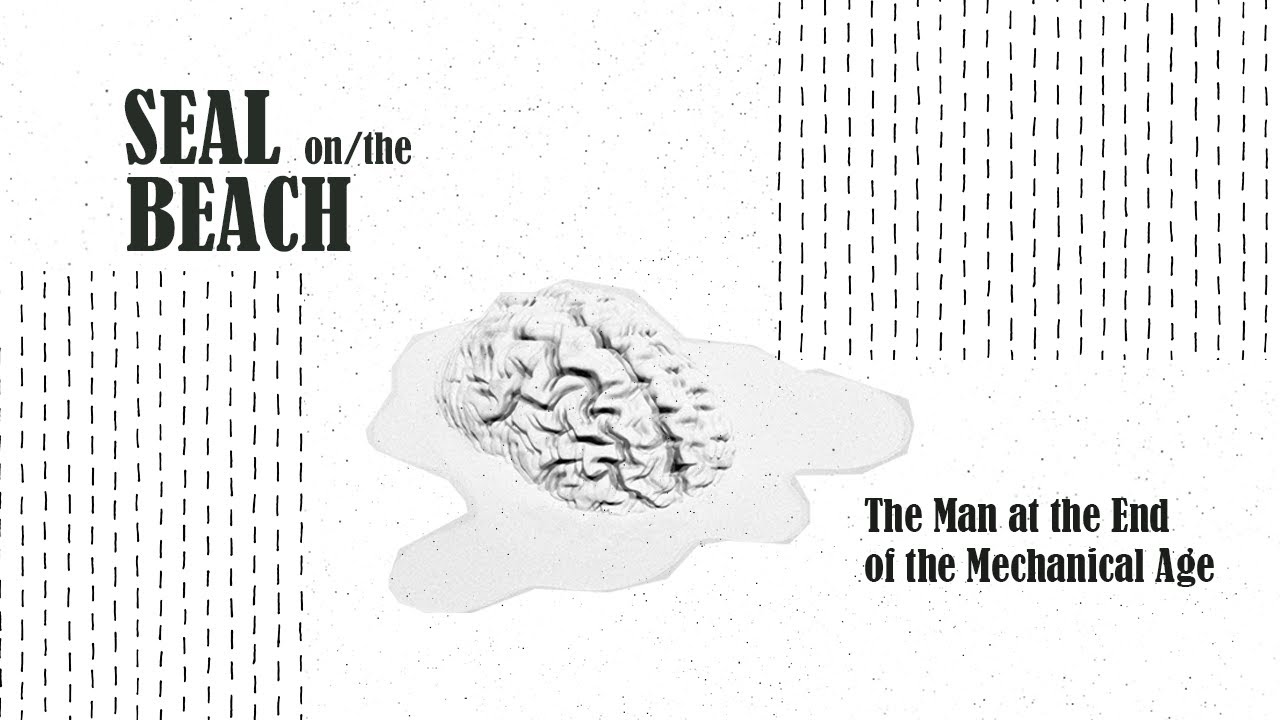
In 1968, curator Pontus Hultén captured this shift in the MoMA exhibition he curated, “The Machine as Seen at the End of the Mechanical Age.” Reflecting on the era’s transition, he wrote:
"The mechanical machine – which can most easily be defined as an imitation of our muscles – is losing its dominating position among the tools of mankind; while electronic and chemical devices – which imitate the processes of the brain and the nervous system – are becoming increasingly important."
This shift, from tools that imitated our muscles to those that imitate our thought, started our uneasy relationship with technology. We once understood our tools through the body; now they reach into the murkier territory of the mind, where power and limits are far less clear.
Any digital tool, introduced in planning, as a technological extension of our mind, rests on certain assumptions about how our thinking and decision-making work and what needs support. It implies a model of how we collect and process information, how we communicate ideas and influence one another, and how we reach shared decisions. For the past fifty years, explorations of cognition in planning have focused almost exclusively on analytical capabilities and ways to extend them with technologies. Other cognitive capacities, creativity, storytelling, and intuition, are acknowledged, but only as supplements to analysis. Their value as distinct modes of strategic thinking remains unrecognized.
Planning Theory and the Rethinking of Strategic Decision-Making
Since the dawn of the rational planning, planning theory has drawn from philosophy, sociology, and political studies. Yet when these ideas translate into practice, they often become filtered through assumptions about power and political structure. The procedural theories of planning, those focused on how people reason, deliberate, and make collective decisions, have been steadily marginalised.
This has consequences. Even when planning theory does not directly design technologies, it lays the conceptual groundwork for the tools that follow. When its assumptions about decision-making align with how humans actually think, we get useful, flexible tools. When they ignore cognition, misunderstand collective intelligence, or oversimplify how decisions are actually made, the creation of meaningful technological support becomes impossible.
A good example is communicative planning. It offered a vision of collective decision-making and knowledge exchange but overlooked crucial insights from cognitive science about group reasoning and the limits of human attention. Over time, its focus narrowed, from transforming how we think together to managing how we talk together.
The technologies that emerged from this view, stakeholder engagement portals, public comment platforms, participatory mapping tools, helped organise communication but did not deepen understanding. They improved process, not cognition. They digitised dialogue but left reasoning untouched.
Future and what we can do
Alternative forms of planning technology will not emerge from power redistribution alone, nor from novel applications of existing tools or creative combinations of current technologies. They demand better assumptions about how we make strategic decisions, which cognitive capacities need support, and how much we truly understand about those capacities in order to extend them.
Achieving this requires a fundamental reorientation of planning theory itself. Rather than grounding planning in political science, we must anchor it in cognition and decision science. This means deeper collaboration with social cognitive psychologists and a return to procedural planning theories, those focused on how planning is practiced, not just on outcomes. Such an approach can clarify which cognitive skills are fundamental to planning and how they might be meaningfully supported through technology. Only by understanding planning as a cognitive practice can we build technologies that genuinely extend our capacity for collective decision-making, rather than merely reinforcing existing patterns of thought.